Projects and Publications
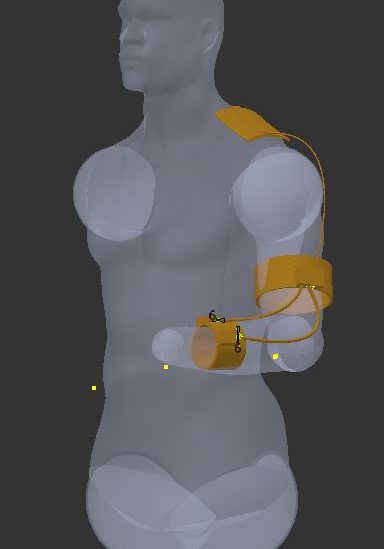
Soft Exosuit - Current
Development of soft Exo-Suit for rehabilitation.
Summary:
I am currently working on the development of robotic exoskeleton and exo-suit for human rehabilitation. The research consist of design and development of actuators, exo-skeleton and exo-suit, with study of material requirement for soft exo-suit and its implementation with experiments.
Project for POWERGRID
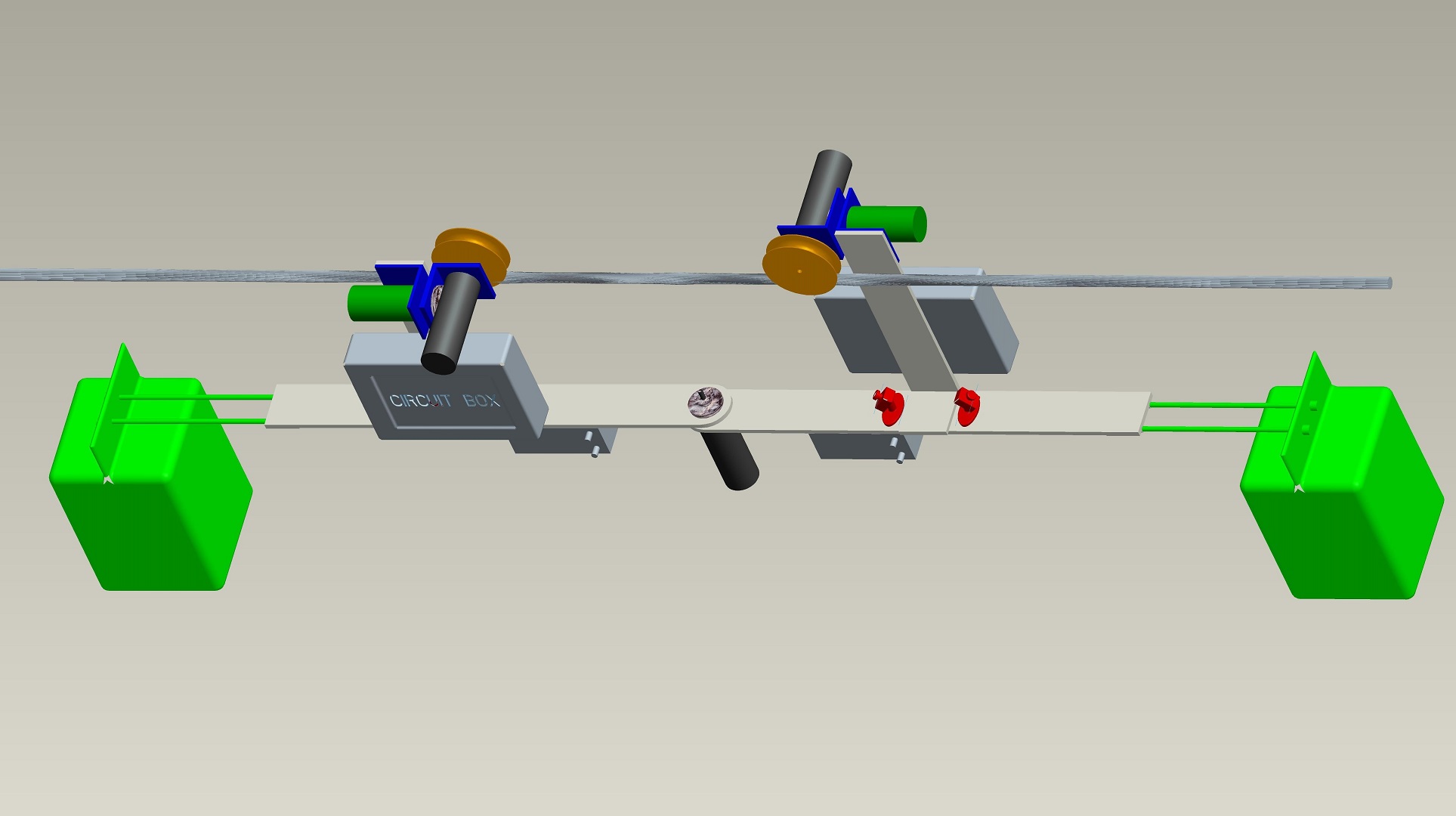
Transmission line Inspection and maintenance robot
Summary:
Prototype Model of ‘Transmission Line Inspection and Maintenance Robot’: The aim of this project is to develop a prototype robot model which can inspect high tension transmission lines without taking shutdown. We develop a small transmission line arena and then develop a small model of robot that can work on that transmission line with all the obstacles included. The robot can be controlled wireless from a remote device and with the help of a camera attached on robot base. The project worked well on arena with some limitations. Later, the project was presented in Powergrid GRIDTECH-2016, International Conference and Exhibition on new technology in transmission.
PhD - Automation, Robotics, and Production
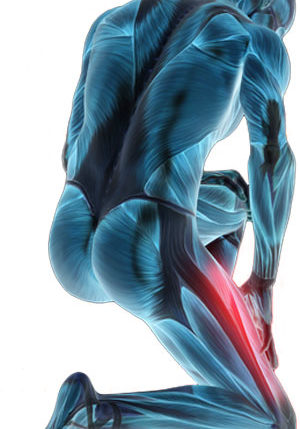
Title: Contribution to the evaluation of muscle fatigue and recovery model.
Abstract:
Automation has changed the working conditions in industries and manufacturing process, but still many industries needs manual operations and handling for various tasks. These manual operations lead to work-related Musculoskeletal Disorders (MSD) which is one of the major problems for industrial workers. Muscle fatigue is one of the reason leads to Musculo-Skeletal Disorder. The society/companies have to pay attention on this issue due to the new laws on penibility or repetitive tasks. In this thesis we are focusing on the development of an adequate and realistic dynamic muscle fatigue and recovery model for dynamic work posture, its applications and validation through experiments. Firstly, we have introduced a new dynamic muscle fatigue model with a newly introduced co-contraction factor to predict the physical strength in dynamic conditions. A recovery model is used to predict the recovery after fatigue. Both the models are first validated theoretically and compared with previous models and then validated experimentally. In theoretical analysis models are compared using regression method. Secondly, experiments were conducted on 10 subjects for push pull motion of the arm to study the muscle strength and rate of recovery. Electromyography (EMG) technique is used to analyze the muscle activity. At last the experimental data are used to validate muscle fatigue and recovery model. It has been found that with the increase in muscle fatigue co-contraction index decreases and most of the subjects followed the exponential function predicted by fatigue model. With the use of co-contraction factor dynamic maximum endurance time (DMET) decreases by 25.9 % as compare to R. Ma's Model. Al last, the normalized values of fatigue rate and co-contraction factor are used to predict the DMET for various work load. The fatigue and recovery model proposed in this thesis can be useful in analyzing the muscle fatigue and recovery parameters, to analyze human posture and in improving working ergonomics conditions.
CV for More Details...
To know more about me please download the detailed CV
Publications
Publications
- New Dynamic Muscle Fatigue Model to Limit Musculo-Skeletal Disorder , Laval Virtual 2016: International Conference and Exhibition on Virtual Technologies and Uses, (2016). DOI: http://dx.doi.org/10.1145/2927929.2927935 (External Link)
- Experimental validation of a New Dynamic Muscle Fatigue Model, Springer International Publishing, Switzerland 2016, V.G.Duffy (Ed.): DHM 2016, LNCS 9745, pp 54-65,2016. DOI: 10.1007/978-3-319-40247-5_6 (External Link)
- Validation of a New Dynamic Muscle Fatigue Model and DMET Analysis, International Journal of Virtual Reality, 2016, 16(01), 22-32, (2016) (External Link)
- Preliminary Design of Soft Exo-Suit for Arm Rehabilitation. In: Duffy V. (eds) Digital Human Modeling and Applications in Health, Safety, Ergonomics and Risk Management. Healthcare Applications. HCII 2019. Lecture Notes in Computer Science, vol 11582. Springer, Cham
- Design and Development of an Electric Skateboard Controlled Using Weight Sensors. In: Streitz N., Konomi S. (eds) Distributed, Ambient and Pervasive Interactions: Understanding Humans. DAPI 2018. Lecture Notes in Computer Science, vol 10921. Springer, Cham